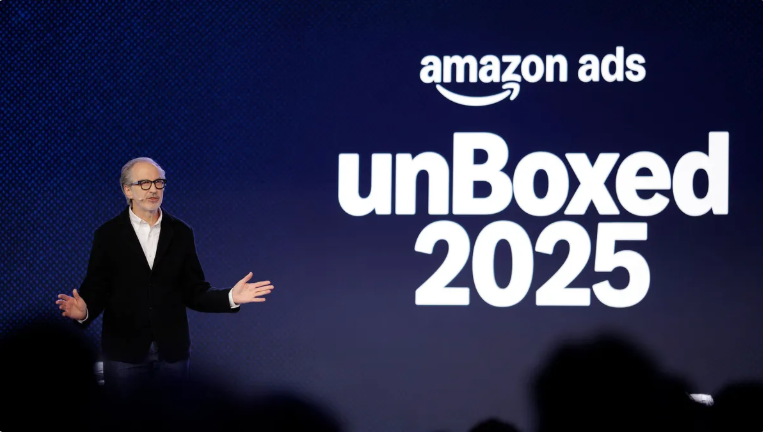

Amazon just gave its voice assistant the ability to finish what an ad starts. At Cannes Lions last week, Amazon introduced Alexa+ Agentic Ads, a format that lets a shopper go from hearing an ad to completing a purchase entirely inside a spoken conversation, with no click, no QR code and no second screen involved.
The launch partners are a useful signal of intent. Papa Johns is taking food orders through the format, and artists including Beck, Jill Scott and Omar Courtz are selling concert tickets via Ticketmaster, all on Echo Show devices. Charlotte Maines, Amazon’s VP of Content and Advertising for Alexa, put it plainly: “Alexa+ Agentic Ads close the gap between intent and action, a customer can go from curiosity to a completed purchase in a single conversation.”
That gap has always been where advertisers lose people. Sponsored ads, DSP creative, even Sponsored Brands videos, all of it has historically ended at a click that dumps the shopper onto a page they then have to browse, compare and check out from. Alexa+ Agentic Ads collapse that entire sequence into one exchange, with Alexa remembering past preferences (Amazon’s own example is Alexa recalling how you like your pizza topped) to skip the back-and-forth.
Why This Isn’t an Isolated Feature
This launch didn’t come out of nowhere. Two weeks earlier, Amazon Ads published an outlook for advertisers explaining what it calls agentic shopping, built around the new “Alexa for Shopping” experience that folds Rufus and Alexa+ into a single AI shopping layer reaching hundreds of millions of customers. The message to brands and agencies was direct: the familiar keyword-to-product-page funnel is being supplemented by an agent-led one, and bidding, creative and measurement all need to adapt alongside it.
Seen together, the pieces form a pattern rather than a one-off product launch. Sponsored Products and Sponsored Brands prompts already surface AI-generated answers inside search. Sponsored Brands collections let Amazon’s AI assemble product groupings automatically. Now Alexa+ Agentic Ads close the loop by letting the assistant transact, not just recommend. Amazon is building a shopping experience where an algorithm increasingly decides what gets seen and, in some cases, what gets bought.
Important note: self-service access isn’t open yet. Pricing hasn’t been disclosed and the current partner list is closed to a handful of brands. This is a beta signal, not a channel you can bid into this quarter. But Amazon has a track record of moving beta ad formats to general availability inside a year, so it’s worth treating this as a preview rather than a curiosity.
What Sellers Should Do Now
You can’t buy Alexa+ Agentic Ads yet, but you can start preparing the fundamentals that any agent-led buying flow will depend on.
1. Clean up structured product data
Agents pull from listing content, A+ content and catalogue attributes to answer questions and complete transactions without a human scanning a page. Gaps or inconsistencies in titles, bullet points and backend attributes that a shopper might previously have skimmed past will now actively confuse an AI assistant deciding whether to recommend or transact on your product.
2. Get comfortable with Sponsored Products and Sponsored Brands prompts
These are already live and already billable as part of standard CPC bidding, and they are the closest thing to a dry run for how your brand shows up inside AI-generated answers today. Review which prompts your products are surfacing in and whether the copy Amazon is generating from your listing actually represents you well.
3. Treat measurement as a moving target
If a purchase can now happen entirely inside a voice exchange, standard click-through attribution won’t capture it. Keep an eye on how Amazon Marketing Cloud reports on these newer formats as they roll out, since agent-led conversions are likely to need their own reporting logic rather than being folded into existing ACOS calculations.
4. Watch stock and fulfilment reliability
An agent that closes a sale in one conversation has no tolerance for a listing that turns out to be out of stock at checkout. Tight inventory management becomes even more important as the gap between “ad impression” and “completed purchase” shrinks toward zero.
The Takeaway
Alexa+ Agentic Ads are not something most sellers can act on directly this month. What they confirm is the direction Amazon has been signalling since its Ads Agent and agentic shopping playbook: discovery and transaction are merging into a single AI-mediated step. The brands that show up well in that world will be the ones whose product data, creative claims and measurement setup were already in order before the format opened up to everyone else. Start tidying now, so you’re ready to bid the moment self-service access lands.