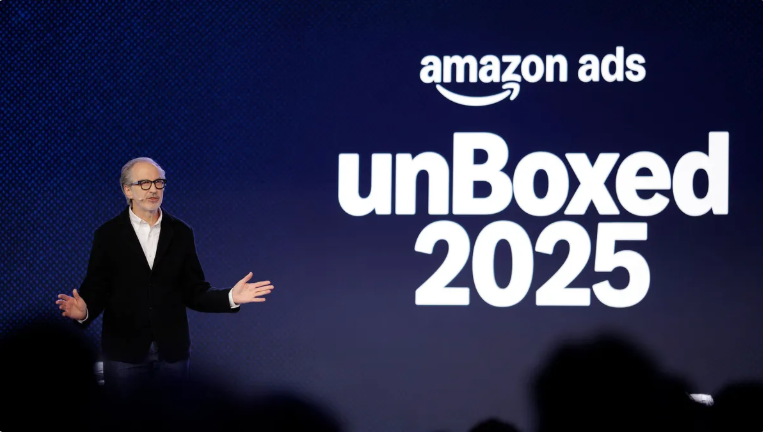

Earlier this month, Amazon Ads published its clearest signal yet that the traditional keyword-to-PDP advertising funnel is changing. The announcement centred on agentic shopping, a new model that unifies Rufus and Alexa+ into a single AI shopping layer reaching hundreds of millions of customers. For sellers who have built their paid strategy around search term reports and bid modifiers, this is worth sitting with.
What Agentic Shopping Actually Changes
In the classic model, a shopper types a query, sees sponsored and organic results, clicks through to a PDP and converts. Every step is attributable.
In the agentic model, a shopper asks Rufus or Alexa+ a question (“what’s a good lightweight blender for smoothies?”) and the AI answers conversationally, surfacing a shortlist of products. The shopper can buy directly from that conversation. No SERP visit, no keyword match, no campaign click. The sale happens but your PPC dashboard does not see it.
Amazon has laid out the implications for advertisers, framing it as a supplement to existing channels rather than a replacement. The honest read is that it is both: some queries that previously generated sponsored impressions will now be intercepted by the agent before the results page loads.
The Measurement Gap
This is the part that matters most for how you interpret your data right now.
Key signal: If your sessions soften over the next two quarters while units hold steady (or even grow), the gap is not a tracking error. Agent purchases are filling it. Your PPC reports will show strong ROAS on declining volume, which looks fine until a competitor works out the agent shelf and takes category share you did not know you were losing.
Amazon’s own guidance points to a “two to three-quarter window” before larger sellers consolidate position in agent-driven discovery. That window is open now.
Four Things to Act on for Q3
1. Monitor impression share weekly
Set up a weekly branded vs. non-branded impression share split. Flat or declining non-branded share alongside stable conversions is an early signal that agents are absorbing generic query intent. Catch it early before the trend becomes structural.
2. Watch the PDP-to-units ratio
Pull sessions and units ordered at the ASIN level. If sessions trend down but units hold, agent traffic is compensating. If sessions and units both fall, something else is wrong and needs a separate investigation.
3. Freshen your reviews
Agents summarise product alternatives, and fresher reviews carry more weight in those summaries than older ones. A product with a solid 4.4 rating but reviews clustered in 2023 is disadvantaged against a competitor with similar ratings and recent activity. A review-request campaign targeting recent purchasers is cheap insurance.
4. Audit your catalogue attributes
Structured data (material, fit, certifications, compatibility) is the raw input agents use to match products to conversational queries. Incomplete attributes mean the agent cannot confidently recommend your ASIN for queries it would otherwise fit. Run a completeness check across your top 50 ASINs and fill the gaps before peak season.
Where Ads Agent Fits
Alongside the agentic shopping shift, Amazon is also changing how campaigns get built. Amazon Ads Agent, now in beta, lets sellers create and optimise campaigns via natural language prompts, with the AI handling bid adjustments and creative variants automatically. Early beta results point to a 14% average ACoS reduction within 30 days and 30 to 40% less time spent on campaign management.
Bottom line: The two developments together sketch out Amazon’s direction: less manual PPC work on the campaign side, and more strategic attention needed on the organic and conversational side. The automation handles the execution; the seller needs to handle positioning, catalogue quality, and measurement interpretation.
The Takeaway
The keyword funnel is not going away. But agentic shopping means a growing slice of your category’s demand is being routed through a channel where standard PPC bidding has no direct lever. The sellers who adapt fastest will be the ones who treat catalogue completeness, review recency, and impression share monitoring as advertising inputs, not just operations tasks.
Start with the impression share and PDP-to-units checks this week. The data will tell you whether the agentic layer is already a factor for your account.