
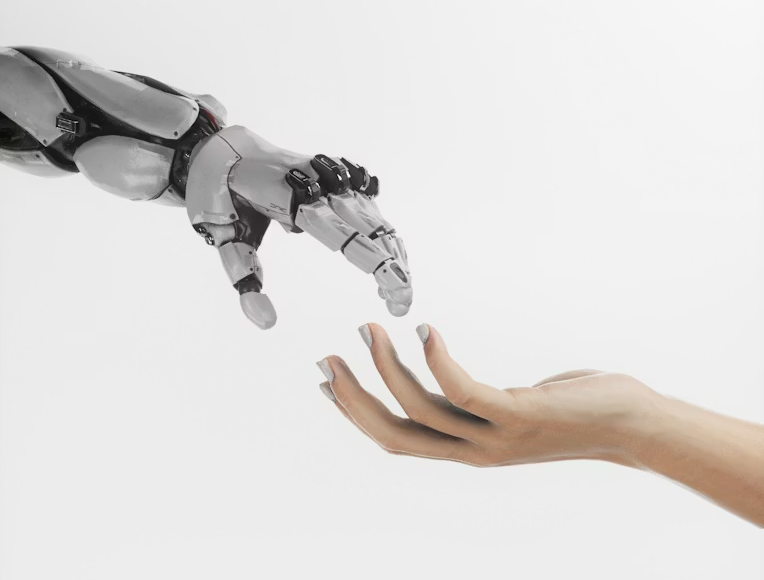
Amazon advertising is entering a new era.
For years, successful PPC management meant hours spent inside spreadsheets and campaign dashboards:
- adjusting bids manually
- mining search terms
- restructuring campaigns
- exporting reports
- reacting to performance changes after the fact
But Amazon’s latest AI developments suggest that model is starting to break down.
This week, Amazon opened beta access to its new MCP Server for Amazon Ads, allowing AI agents to interact directly with advertising accounts through natural language instructions. Combined with Amazon’s growing suite of AI-powered advertising tools, it’s becoming increasingly clear where the platform is heading:
Toward AI-managed advertising workflows.
The question is no longer whether AI will influence Amazon PPC.
It already does.
The real question is:
Will Amazon AI eventually replace manual campaign optimization altogether?
Amazon Is Automating the Operational Layer
At its core, Amazon’s new AI infrastructure is designed to reduce friction.
Historically, advertisers had to manually:
- create campaigns
- adjust bids
- analyze search terms
- build reports
- pause underperforming keywords
- manage budgets
Now AI systems can increasingly handle those tasks automatically.
Instead of spending hours inside Campaign Manager, advertisers may soon be able to give instructions like:
“Increase budget on campaigns with high ROAS and low impression share.”
Or:
“Pause keywords with ACOS above 45% over the last 14 days.”
The AI can then execute those actions directly through Amazon’s advertising infrastructure.
That’s a major shift.
It moves campaign management away from:
- manual execution
- spreadsheet-heavy workflows
- reactive optimization
and toward:
- conversational advertising
- autonomous optimization
- AI-assisted decision-making
The Parts of PPC AI Will Replace First
Not all advertising tasks are equally defensible.
Some areas of campaign management are highly repetitive and data-driven, making them ideal for automation.
1. Bid Management
This is probably the first major casualty of AI-driven advertising.
Machines are simply better at:
- reacting to CPC changes
- monitoring conversion trends
- adjusting bids continuously
- reallocating budget in real time
Humans cannot compete with machine speed at scale.
What once required daily manual adjustments can now happen continuously in the background.
2. Search Term Analysis
Search term mining has historically been one of the most time-consuming parts of Amazon PPC.
AI systems are increasingly capable of:
- identifying converting keywords
- detecting wasted spend
- surfacing negative keyword opportunities
- expanding long-tail targeting automatically
Pattern recognition is one of AI’s biggest strengths.
This means the traditional “download search term report and filter in Excel” workflow is likely fading fast.
3. Campaign Structuring
Many PPC managers still spend large amounts of time:
- separating match types
- splitting campaign structures
- organizing portfolios
- duplicating campaigns for testing
AI can already generate optimized campaign structures in seconds.
As Amazon’s systems improve, campaign architecture itself may become increasingly automated.
4. Reporting
The classic monthly PDF report is becoming less valuable.
Clients increasingly want:
- live insights
- instant answers
- predictive recommendations
- conversational reporting
not static documents filled with screenshots and charts.
AI can now summarize account performance faster than most agencies can build reports.
What AI Still Cannot Fully Understand
Despite the hype, Amazon AI still has important limitations.
Advertising performance does not exist in isolation.
Campaign results are influenced by broader business variables including:
- inventory levels
- contribution margins
- pricing strategy
- review velocity
- conversion rate
- organic ranking
- seasonality
- competitor activity
This is where human judgment still matters enormously.
For example:
- AI may aggressively scale a profitable campaign without recognizing stockout risk.
- It may reduce spend on keywords that support organic rank growth.
- It may optimize toward short-term ROAS while damaging long-term brand positioning.
Advertising data alone rarely tells the full commercial story.
AI can optimize inside the ad account.
But businesses still need humans who understand:
- strategy
- profitability
- positioning
- operational constraints
- customer psychology
The Future Role of Amazon PPC Managers
The biggest change may not be the elimination of PPC managers.
It may be the transformation of what PPC managers actually do.
Historically, many agencies created value through:
- manual optimization
- campaign setup
- spreadsheet analysis
- operational execution
But AI is rapidly commoditizing those activities.
The future role of Amazon advertising professionals may look more like:
- AI supervision
- growth strategy
- creative direction
- systems design
- automation oversight
- commercial analysis
In other words:
The value moves higher up the stack.
The agencies most likely to thrive in the next few years probably will not be the ones manually adjusting bids faster.
They’ll be the ones building:
- proprietary AI workflows
- inventory-aware automation
- profit-focused optimization systems
- creative testing engines
- cross-channel intelligence layers
What This Means for Amazon Sellers
For sellers and brands, this shift could dramatically change how advertising works.
In the near future:
- campaigns may launch automatically
- optimization may happen continuously
- reporting may become conversational
- testing cycles may accelerate dramatically
That changes the source of competitive advantage.
Winning may no longer depend on who is best at manual PPC management.
Instead, the edge may come from:
- stronger creative
- better data inputs
- faster AI workflows
- smarter commercial strategy
- superior operational systems
The businesses that adapt early will likely move faster than competitors still relying on entirely manual processes.
Final Thoughts
Amazon is not trying to remove advertisers from the platform.
It is trying to remove friction from advertising.
Manual campaign optimization is unlikely to disappear overnight.
But many of the repetitive operational tasks that defined Amazon PPC for the last decade are increasingly becoming automated.
The future probably isn’t:
- fully human advertising
or - fully autonomous AI advertising
It’s likely a hybrid model where:
- AI handles execution speed
- humans provide strategic direction
The manual PPC era is starting to fade.
The AI-supervised advertising era is beginning.