Here it is:
Amazon’s MCP Server Changes the Agency Model. Here’s What We’re Doing About It.

Amazon recently redrew the map for advertising agencies, and most of the industry hasn’t fully processed what that means yet.
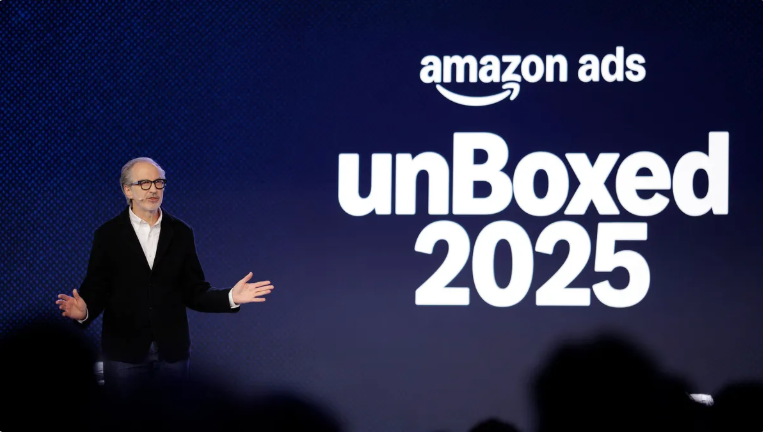
At the IAB Annual Leadership Meeting, Amazon announced the open beta of its Amazon Ads Model Context Protocol (MCP) Server: a standardized infrastructure that connects AI agents directly to Amazon’s advertising systems through natural language. A single conversational prompt can now trigger campaign creation, budget adjustments, bid management, and reporting workflows that previously required hours of manual execution or expensive custom development.
This isn’t incremental improvement. It’s a structural change to how advertising work gets done, and it demands a serious strategic response.
Understanding What’s Actually Changing
To appreciate the significance of this announcement, it helps to understand what made AI automation in advertising difficult before now.
When an AI agent attempts to interact with an advertising platform, it typically has to reason its way through which API to use, how that API is structured, and which version is current, before it even begins the actual task. This reasoning overhead slows execution, introduces errors, and requires constant maintenance as platforms evolve. Amazon’s internal testing surfaced a telling example: an agent asked to generate a path-to-conversion report wrote custom code and pulled over three years of data through Amazon Marketing Cloud, when a simple API call would have done the job.
The Model Context Protocol, originally developed by Anthropic, solves this by providing AI agents with explicit instructions for common workflows. As Amazon’s VP of Ads Measurement Paula Despins explained, the goal is for agents to spend their time reasoning on things that matter rather than getting the basics wrong.
The result is AI that doesn’t just have access to advertising systems. It knows how to use them correctly. That distinction is everything.
What This Means for Agencies
The implications are significant and worth thinking through carefully.
Routine campaign management, including setup, budget pacing, bid adjustments, and performance reporting, has always consumed a disproportionate share of agency time relative to the strategic value it delivers. These tasks are necessary, but they are not where expertise lives. MCP-connected AI agents can execute these workflows at a speed and consistency that no human team can match.
This creates a real bifurcation in the agency landscape. Agencies that can effectively direct AI agents to handle execution will free their teams to operate at a higher level, focusing on strategy, creative testing, audience insights, and business-level counsel. Agencies that don’t adapt will find themselves competing on labor costs they can no longer justify.
The efficiency gains aren’t marginal. They compound, and they compound quickly.
How We’re Preparing at Mazescale
We’ve been tracking the development of agentic advertising infrastructure closely, and we’re not waiting for access to arrive before building the capabilities to use it well. Our preparation is focused on two areas.
A Proprietary Prompt Library
The value of MCP access isn’t just in having it. It’s in knowing how to deploy it with precision. Natural language prompts that are vague, poorly structured, or missing key context will produce mediocre results regardless of how sophisticated the underlying technology is. Prompt engineering, in this context, is a genuine craft.
We are building a proprietary prompt library purpose-built for Amazon Ads workflows. This is a structured, version-controlled collection of prompts engineered for specific use cases across the campaign lifecycle, from initial setup through ongoing optimization and reporting. Each prompt is documented with the context in which it performs well, the outputs it produces, and the edge cases to watch for.
This library represents something more than a collection of instructions. It is codified institutional knowledge, the accumulated understanding of what works on Amazon Ads translated into a format that AI agents can act on reliably. It is also a living document, updated continuously as we test, learn, and refine.
The Broader Signal
Amazon’s MCP announcement doesn’t exist in isolation. It reflects a broader industry direction toward what Amazon CEO Andy Jassy has described as “agentic commerce,” a world where AI agents increasingly mediate the relationship between advertisers, platforms, and consumers. Amazon’s ad revenue grew 24% year-over-year to $17.7 billion in Q3. The platform is scaling. The tooling is maturing. The transition is underway.
For agencies, the question is not whether to engage with this shift, but how seriously to take it and how soon. We think the answer is: very seriously, and immediately.
The agencies that build real expertise in agentic advertising now, not familiarity but genuine operational capability, will hold a durable advantage. The infrastructure is arriving. The only variable is who is ready to build with it.