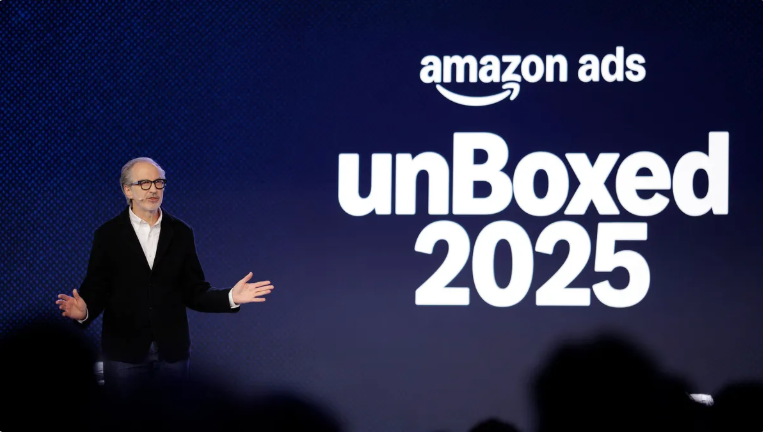

The advertising landscape just shifted in a major way. Amazon has announced the open beta of its Amazon Ads Model Context Protocol (MCP) Server—a standardized infrastructure that allows AI agents to connect directly to Amazon’s advertising systems. For agencies managing Amazon ad campaigns, this isn’t just another tech update. It’s a fundamental change in how advertising work gets done.
What Actually Happened?
At IAB’s Annual Leadership Meeting on Monday, Amazon announced that advertisers and ad tech partners will be able to integrate AI agents with Amazon Ads through a single, standardized connection. Think of it as creating a universal translator between AI assistants and Amazon’s advertising platform.
Previously, if you wanted automation, you’d need custom integrations for every workflow—a time-consuming, technical process that required developer resources. With the MCP server, Amazon says agencies will be able to connect AI agents to Amazon’s ad infrastructure in minutes rather than weeks.
Breaking Down the Technology
The Model Context Protocol (originally developed by Anthropic, the company behind Claude) acts as a middle layer between AI agents and Amazon’s advertising APIs. Here’s what makes it powerful:
Natural language becomes action: Instead of writing code or navigating complex interfaces, advertisers can use conversational prompts. An agent can understand “Create a Sponsored Products campaign for our new winter collection with a $500 daily budget” and execute it automatically.
Bundled workflows: Amazon has created what Paula Despins, VP of ads measurement at Amazon Ads, calls “tools for common actions.” These bundle multi-step processes into single commands. Rather than manually navigating through campaign creation, budget allocation, product selection, and report generation separately, agents can handle the entire workflow through one prompt.
As Despins explained: “In almost any ad system, multiple actions are required. With tools, you can simplify the common actions down to a single conversational prompt.”
Reduced reasoning load: This is crucial. AI agents typically need to figure out which API to use, how it works, and which version is current. This “reasoning overhead” slows things down and introduces errors. MCP tools provide explicit instructions, so agents spend their processing power on strategic decisions rather than technical basics.
Why This Matters for Amazon Ads Agencies
1. Dramatic Time Savings on Routine Tasks
Campaign setup, budget adjustments, bid management – these consume hours of agency time weekly. With AI agents handling these through conversational prompts, account managers could execute tasks in seconds that previously took hours.
2. Lower Technical Barriers
You won’t need a developer on retainer to build custom integrations for every client workflow. The standardized protocol means junior team members can leverage sophisticated automation through natural language, democratizing access to advanced advertising capabilities.
3. Fewer Costly Mistakes
Amazon shared a telling example from internal testing: An agent asked to generate a path-to-conversion report wrote custom code and processed over three years of data through Amazon Marketing Cloud—when a simpler API call would have sufficed. Other agents defaulted to outdated API versions. These are the kinds of mistakes that waste money and time.
As Despins put it: “It’s a lot of heavy lifting to teach the agent how all of this works. The difference with MCP is you’re going to start from the language in which it operates, and then when you add tools, you take common multi-step workflows and you give an instruction manual to it. Then it’s going to spend its time reasoning on things that matter rather than reasoning—and sometimes getting it wrong—on the basics.”
4. Scalability Without Proportional Headcount
As agencies take on more clients or manage larger catalogs, the traditional model requires proportionally more people. AI agents working through MCP could scale operations without scaling headcount at the same rate – managing hundreds of campaigns with the same effort it takes to manage dozens manually.
5. Competitive Pressure Is Coming
Amazon isn’t alone in this push. The industry has seen similar efforts like AdCP announced last year. This standardization of how AI agents interact with ad systems is becoming table stakes. Agencies that don’t adapt risk falling behind competitors who can move faster, operate more efficiently, and offer more competitive pricing.
The Bigger Picture: Agentic Commerce
Amazon CEO Andy Jassy indicated in Q3 last year that AI agents could expand how consumers shop online. This came as Amazon’s ad business grew 24% year-over-year to $17.7 billion in Q3—and the company is clearly betting that agentic AI will accelerate that growth.
For agencies, this means the playing field is evolving rapidly. As Despins noted, the ad industry is “breaking away from rigid, manual ad workflows toward agent-led automation.” The shift isn’t just about efficiency—it’s about fundamentally rethinking how advertising work gets done.
The agencies that thrive will be those that rethink their operations around what AI agents do best: executing repeatable tasks flawlessly at scale, while humans focus on strategy, creative, and client relationships.
What Agencies Should Do Now
1. Prepare for early access: Amazon has announced the open beta but hasn’t specified exact availability dates. Monitor Amazon Ads announcements and position your agency to be an early adopter when access opens. Despins noted that Amazon’s ad partners had been asking for this kind of protocol, suggesting pent-up demand.
2. Audit your workflows now: Identify which tasks consume the most time but require the least strategic thinking. Campaign setup, budget adjustments, report pulling -these are prime candidates for agent automation.
3. Invest in team training: Start shifting focus from manual execution skills to prompt engineering and AI oversight. Your team will need to know how to direct agents effectively, formulate clear conversational prompts, and verify outputs.
4. Rethink your value proposition: As efficiency gains compound, client conversations will shift from “how many hours did this take?” to “what strategic outcomes did we achieve?” Start positioning your agency around insights, strategy, and business results rather than labor hours.
5. Stay informed on standards: MCP isn’t the only protocol being developed. AdCP and other industry efforts are emerging. Track these developments and be prepared to work across multiple standards if the industry fragments.
6. Test and learn carefully: When access becomes available, start with low-risk workflows. Build confidence with simple tasks before deploying agents on high-stakes campaigns. Document what works and what doesn’t.
The Bottom Line
Amazon’s MCP server represents a clear inflection point: advertising is moving from human-executed, software-assisted work to AI-executed, human-directed work. For agencies, this isn’t a threat – it’s an opportunity to shed the tedious work that never excited anyone and focus on what actually drives client success: strategy, creativity, and business growth.
The open beta follows Amazon’s closed pilot (announced last year), and while Despins declined to specify how many advertisers participated in that pilot, the move to open beta signals Amazon’s confidence in the technology.
The agencies that prepare for this shift now, retrain their teams, and start planning operations around AI-agent collaboration will have a significant advantage when access rolls out. Those that wait will find themselves outpaced by more efficient competitors who can deliver better results at lower costs.
The infrastructure is coming. The question is: what will you prepare to build with it?